An anonymous poster has challenged my defense of school unions (here, here, here, here, here, here, and here) in three separate posts, ad his/her arguments are worthy of a serious response. He/she has no qualms about calling me "whining" and "greedy", so I think it's a good thing the posts were anonymous, so I can avoid the temptation to return fire in kind. The poster makes some claims which I can agree with, some which need to be refuted, and poses a larger question that should be addressed.
First off, the poster claims that because teachers are fired at a much lower rate than other professionals, this proves teachers unions are an impediment to getting rid of bad teachers. This simply doesn't follow. I don't know about the situation where the poster lives, and I can't defend New York's infamous "rubber room" model, but where I teach the process to fire a teacher is pretty straight-forward. A teacher would need to be identified as under-performing by an administrator. This doesn't differ from the model in the private business world, where a boss would do an evaluation and tell an employee they need to improve to maintain their employment. Then, they would be put on what is called a "plan of assistance", in which the areas of improvement would be identified, and the teacher would have a chance to show that they have improved. If the teacher failed to improve, they would be fired. The union negotiates the mechanism by which this is to be done, but does not try to prevent it from being implemented. Teachers know we have under-performing teachers in our midst, and we know they make our jobs harder. Teachers compose the teachers unions. We want bad teachers out. The problem is that identifying bad teachers takes time. A round of bad test scores does not show that a teacher is ineffective. Perhaps the class had low skills to begin with. Just as in the private sector, a real performance review would have to be done to see if a firing would make the organization more efficient, or if it would just be a reaction to a hiccup in the market which has nothing to do with a particular employee and would thus make the whole school or company, less effective because of the loss of talent. But administrators rarely use this mechanism. Why not? Partly, it's because it takes so much time and energy. That's not the union's fault. Identifying the effectiveness of employees takes a lot of time and energy for private sector companies, too. But they do it, or they fail. So why don't administrators? I have a theory.
But before we get to that, the poster also defends our current grading system by saying that colleges need it, and regardless of the fact that grades might be inflated, grades show who the high performers in a class were. The problem with this is that it's simply not true. It might work, if all grades were inflated equally, but when they aren't, a college can't tell if one school's valedictorian will be as successful as another school's. The grades don't tell colleges or employers what a student is capable of doing. The poster challenges me to propose a better system. I can't claim to have thought of this myself, but I'm a firm believer in what is called proficiency based grading. Imagine a college (or the student's teacher the following year) looking at his or her B grade. That might mean 1) the student did 80% of the paperwork, regardless of how meaningful the work was, or 2) the student scored 80% on tests which are different from the tests given elsewhere or 3) the teacher liked the student, but not as much as the kid who got an A, or 4) the teacher had a recurring illness and the substitute gave everyone a B, or 5) something else which might be equally arbitrary. Proficiency based grading produces a report card that looks very different. It identifies specific skills. Then, the teacher assigns a score to each one (something along the lines of Exceeds, Meets, Not Yet Met). The list of skills is long and can be scaled up to match expectations determined by the state or even across the nation. Now the college or next teacher has a concrete idea of what that student can actually do. This certainly is more time consuming for teachers, but it also saves a lot of time in the beginning of instruction, when teachers have to figure out what kids are capable of doing again each year. What is the impediment to this system? If you give that long report card to parents, by and large they ignore all the skills their students have mastered, and all the ones they lack, and ask the teacher for a letter grade. Colleges, similarly, want a GPA, regardless of its meaninglessness, rather than discrete knowledge of specific skills. Identifying what kids can and can't do needs to be a serious part of any discussion about school reform. But blaming teachers unions is a lot easier.
The poster also makes reference to the tenure system. This is a common misconception, and comes from a confusion about teachers and college professors. Public school teachers, at least in Oregon, don't have anything called "tenure". For the first three years or employment, a teacher can be fired without any reason or explanation at all. That's called the probationary period. After that time, a teacher can be fired after going through that process I described above. Or they can be fired for doing something unethical. Those firings can take place whether a teacher has been teaching for four years or thirty-five. There is a lot of good research that shows that experience makes a huge difference in teacher quality. I can tell you, anecdotally, that I'm a hell of a lot better teacher now than I was during my probationary period. But the length of my service provides me no added protection if I were to slack off and stop providing my students with high quality instruction.
One area where the poster and I agree is that "teaching is extraordinarily difficult and there are lower barriers to entry." This is caused by a simple supply and demand problem. We need lots and lots of people to do something that we both recognize as extraordinarily difficult. But the poster is also opposed to paying teachers more money (we are "greedy", after all). So, what is the solution? We could raise the barriers to entry. I had to get a masters degree to get into teaching. I paid a ridiculous amount for that degree (much of which is my own stupid fault for believing that the quality of the degree and its corresponding respect from potential employers would be affected by the reputation of the extremely expensive private university I attended). I had to take expensive tests to get my license. And yet, there's good research that is leading some school reformers to believe that, after a certain point, a teacher's educational level and test scores have little bearing on their actual performance in the classroom. So if we can't adequately predict who will make a good teacher based on test scores or education, how can we put up higher barriers to entry? These barriers would keep good teachers out as well as bad ones, according to the current research, but would prevent us from meeting the needed supply. I don't have a magic bullet on this one. Free marketers would claim that more money would solve the problem, but clearly our economy cannot bear the weight of paying teachers like hedge-fund managers. So, how can we encourage our best and brightest to go into teaching? Some countries do this by making the profession highly respected. I'm not sure if that would work, and it would certainly take a while to make such a cultural change, but if we can agree that it's at least cheaper than trying to price good teachers into meeting the supply needs so that we can more easily afford to fire the bad ones, then blaming the problems of public education on teachers unions (teachers) is a really bad way to encourage anyone to go into the field.
Before I really get into the nitty-gritty, I have to address this claim, too: The poster thinks I'm "complaining about being paid more than your private sector counterparts for working 3/4 as much time (plus 2 fewer hours a day, at least) and having the opportunity to make even more working over the summer." This shows a wildly inaccurate conception of a teacher's hours. I was complaining that some ignorant people believe that teachers get lots of paid vacation, when, in fact, we are not paid for the summers or breaks during the year. I didn't say we didn't work during those times. Nor did I say we work two fewer hours per day than our private sector counterparts. I'm not sure where the poster is from, but I don't work forty hours a week, and just because I don't get paid during the summers or holidays doesn't mean I'm not working. For example, this summer I spent that time the poster believes I could have been working taking 9 graduate credits of continuing education. Taking graduate courses is required to maintain my license. When I wasn't in class, I was developing curriculum for my own courses. During the year, I spend exorbitant amounts of time grading after school and during "breaks". In fact, last year, while our school was under construction, I stepped out of my classroom on Christmas Eve and saw that the welders were hard at work on the beams that hold up the high school's new roof. For a moment, I took comfort that I wasn't the only one working at school on Christmas Eve. Then I realized that those guys were not only being paid, but were probably getting time and a half, maybe even double time. I was not being paid at all. Now, despite what some might think, I'm actually not whining. I used to work for Merril Lynch, selling stocks and bonds. I made a lot more money and worked a lot fewer hours in the private sector. And I hated it. I chose this profession, and I do it because I enjoy it, and I'm good at it. But please, please, don't believe for a minute that teachers work from the start of the school day to the end and that's it. In fact (speaking of low barriers of entry) the only person who dropped out of my masters cohort was the guy who realized just how many more hours he'd have to work to be successful in teaching than his job as a bank loan officer (where he made more money). One of the reasons teachers unions try so hard to negotiate for more pay is not because we're greedy, but because we want to be paid a fair hourly wage that corresponds to that of our private sector peers who work many fewer hours than we do. My first year (and the first year of teaching is, admittedly, and outlier because it's so difficult) I was working twelve hours a day almost every day, and when I calculated my hourly rate of pay it came to around eleven bucks an hour. Tell me a private sector employee with a masters degree putting in twelve hour days for eleven bucks an hour wouldn't be asking his boss for a raise.
Okay, now to the grand unifying theory that explains why teachers (good or bad) don't get fired, why we can't come up with a magic bullet for falling test scores and increasing drop out rates, why school reform is stuck in an intractable blame game: We don't know what we want teachers to accomplish. I can't take credit for this theory. It comes from a friend who teaches teachers at a Willamette University. In fact, I wouldn't be completely surprised if he didn't post the anonymous comments, playing up their aggressive tone and repeating arguments he knows to be baseless just to bait me into responding. Fine, Neil, I'll repeat your theory: We can't figure out how to fix our schools because we can't agree on what they're supposed to do. We can't determine which teachers are "good" or "bad" because we can't even agree on what they are supposed to do. The poster brings up the successes of students in India (an example I frequently cite in my classes to remind my students who they will be competing against). Is it my job to make my students as motivated as Indian students are when they walk through the door? Is it my job to make sure the students are as pressured by their parents as those Indian students, perhaps by calling parents and harassing them somehow? Should I focus all my energy on making sure my students can fill in the right bubbles on multiple choice tests which may have little or no relation to the kinds of tasks they will face in college or in the workforce? Should I teach them to be critical thinkers who refuse to evaluate themselves based on numbers handed down from the government? Should I make sure they can get into a prestigious university? Should I prepare them to be successful in blue collar jobs which might be vanishing before they graduate? Should I teach them my politics, my culture, or my religious preference? If not, am I inculcating them with my political, cultural, or religious values when I tell them that education is the key to success, or that work should be done on time, or that they should follow school rules? Should I teach them to respect authority by running my classroom in an authoritarian fashion, or should I adopt the "coaching" model and allow students to direct their own learning so that they learn autonomy? Should I teach them that money is how work is measured in our society and model this by leaving school when the contract day ends and refusing to work in the evenings or during the summer, or should I teach them that money and work are disconnected and undermine these future drivers of our capitalist system? Should I prepare them to take a U.S. history test written in Massachusetts or in Texas? Should I teach them to produce the kind of writing that actually gets printed, or to write in the formulaic way that gets a high score when it's graded by a computer program?
Without answers to these questions, we can't easily distinguish good teachers from bad ones, successful schools from failing ones, or even evaluate the success of the system as a whole. The poster argues that the "law of large numbers ensures that with appropriate statistical analysis it is entirely possible to measure the performance of individual teachers." This reminds me of the scene in The Hitckhiker's Guide to the Galaxy when the universe's most advanced computer is asked the meaning to life, the universe, and everything, and responds with the answer "42". We could use statistical analysis if we understood the question, but there is no numerical measure for "good" or "bad", "successful" or "failing", when we can't even agree on what these terms mean.
So, dear poster, before you claim teachers (and you'll understand when I take that personally) have "failed America's students" and are responsible for "how much damage they have done to America's future due to their intransigent profligacy," I would expect that you have a bullet-proof and universally acceptable answer to the question of what we should be doing differently.
But if your answer is "Work harder for less and shut up," I hope you will reveal your name and some details I can use to personalize my next (far less polite) response.
Sunday, December 05, 2010


Friday, November 26, 2010
Shaving for the Play
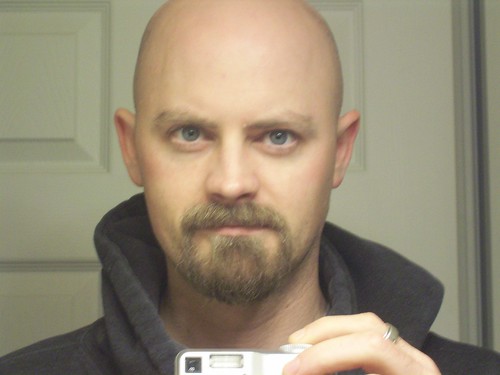
I have a little part in our high school's winter musical (Ebeneezer), and I need to be clean shaven. So, goodbye goatee:
Before:
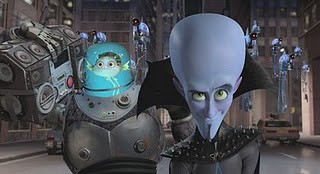
At least I looked a bit like Megamind:
During:

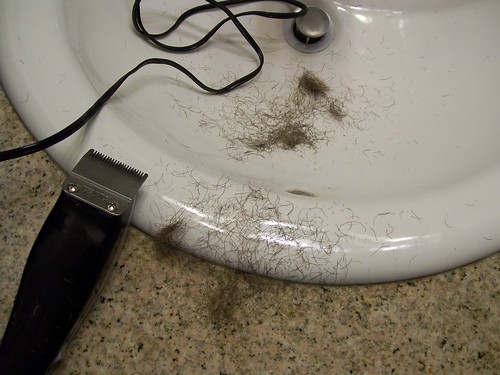
The Mess:
And After:

I'm back to looking like a cross between Gollum:
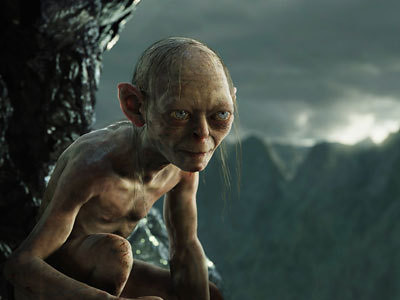
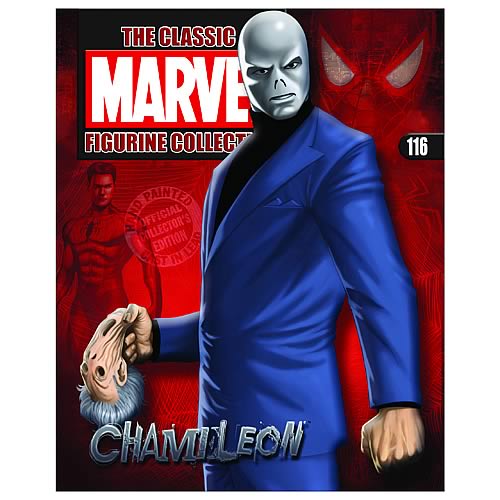
and Chameleon from the Spider-Man comics:
Before:
At least I looked a bit like Megamind:
During:
The Mess:
And After:
I'm back to looking like a cross between Gollum:
and Chameleon from the Spider-Man comics:
Saturday, November 20, 2010
Which Carlos Ruiz Zafon novel is better?
In my creative writing class, I have the students choose novels to read from a handful of my favorites. My process in choosing the books was pretty subjective and selfish. I made a list of my favorite books, then chose the ones that I find to be the best examples of good writing, for different reasons. The students read these novels and then break into roles, some examining word choice, some syntax, some plot, some character, some setting, etc., then report on what the book has taught them about being a writer.
One of the books on the list is Carlos Ruiz Zafon's The Shadow of the Wind. I love Zafon's rich, vibrant prose and descriptions of setting most of all, but the guy can certainly tell a great story. Because I teach high school, and in a relatively conservative community, I didn't choose Zafon's next novel, the prequel to The Shadows of the Wind, called The Angel's Game. In a way it would be a far more appropriate book for a creative writing class. While Shadow is all about being a reader and lover of books, Angel's is about being a writer. Unfortunately, it's also about how being a writer can be a kind of torture that can drive you to madness and murder, and if that weren't enough to raise the hackles of some parents, the protagonist may or may not have made a deal with the devil himself. Still, as I sit here and think about it, it might be the better book. I'm interested to know, from folks who've read both, which is the better of the two in your opinion? You can vote in a simple poll below, but I'd also like to hear some explanation in the comments. Of course, it's likely that no one who comes across this page will have read both books, but if you can't vote here, take that as a sign that you have one or two books to run out and buy. Zafon is a master craftsmen at the very least, so get yourself a copy of each of these novels and give the pair to some friends at Christmas, too. They will thank you profusely.
One of the books on the list is Carlos Ruiz Zafon's The Shadow of the Wind. I love Zafon's rich, vibrant prose and descriptions of setting most of all, but the guy can certainly tell a great story. Because I teach high school, and in a relatively conservative community, I didn't choose Zafon's next novel, the prequel to The Shadows of the Wind, called The Angel's Game. In a way it would be a far more appropriate book for a creative writing class. While Shadow is all about being a reader and lover of books, Angel's is about being a writer. Unfortunately, it's also about how being a writer can be a kind of torture that can drive you to madness and murder, and if that weren't enough to raise the hackles of some parents, the protagonist may or may not have made a deal with the devil himself. Still, as I sit here and think about it, it might be the better book. I'm interested to know, from folks who've read both, which is the better of the two in your opinion? You can vote in a simple poll below, but I'd also like to hear some explanation in the comments. Of course, it's likely that no one who comes across this page will have read both books, but if you can't vote here, take that as a sign that you have one or two books to run out and buy. Zafon is a master craftsmen at the very least, so get yourself a copy of each of these novels and give the pair to some friends at Christmas, too. They will thank you profusely.
Sunday, October 31, 2010
Sent from my iPod at 3:45 in the morning
Tonight, as I am about to climb into bed, I have a song in my head.
It's Cat Stevens' "Peace Train" which I heard today while watching The Rally To Restore Sanity and/or Fear on TV. In the darkness, as I change clothes, I listen to this mental background music and my son's slight asthmatic wheeze. He's in our bed because we have house guests, and they're in his room. I don't realize that my wife has moved to the floor. My son must have been tossing and turning quite a bit to take over the queen-sized while I wrote downstairs, his revenge for being displaced. His tossing and turning won't have any effect on me once I reach my usual near-coma state of sleep.
Before I climb in next to him , I suddenly realize I've unconsciously replaced the word "Peace" with "Sleep".
Yes, I'm climbing on the sleep train.
Sounds nice.
Saturday, October 16, 2010
Tennessee's Free-Market Utopia Fire
If you haven't heard the story yet, some firefighters in Tennessee showed up to a burning house, found that the owner hadn't paid the annual $75 fee for fire protection, and watched as his house burned to the ground. Besides all the family's belongings, there were three puppies inside.
I don't fault the firefighters. They were following procedure, and under that kind of system, if they put out fires for people who didn't pay, no one would. But that's the problem. It's a thoroughly crappy system. I'll bet more than one of those firefighters was thinking the very same thing as they stood there and watched a house burn down.
Now, you're expecting me to write that this isolated (and admittedly strange) incident points to a larger issue. I won't disappoint. Because this not only points to a larger issue, but specifically refutes a whole line of argument used by anti-tax activists. When people talk about cutting taxes, without fail, they say "waste, fraud, and abuse". The line is used so much that, at the O'Donnell vs. Coons debate for the Delaware senate seat, Wolf Blitzer asked Christine O'Donnell what she'd cut from federal spending and specifically added, "And don't just say waste, fraud and abuse, because everybody says that." (She said she'd cut "waste, fraud, and abuse.")
People like me say, "Be specific. Do you consider public education waste, fraud, or abuse? What about police protection? What about firefighters?"
"No, of course not," we're told. "I mean those other things. The carpet in the statehouse was too expensive. And over here is a guy who is cheating the system to get disability when he seems fine to me. And that public education campaign got one billboard more than was necessary. It all adds up, you know."
And it does. But never to the total these folks want to cut taxes. For example, letting the Bush tax cuts expire would add 3 trillion dollars to the annual budget of the federal government. That's 3,000,000,000,000. 3 million millions. That's $3258 per man, woman, and child. Mostly paid by the top 2% who would still be paying less than they paid under that Robin Hood socialist Ronald Reagan. It would take a lot of cheap carpet, eliminated billboards, and prosecuted fraudulent disability recipients to acquire that amount of money. But it could sure teach a lot of kids, put a lot more cops on the streets, and put out a lot of fires in rural Tennessee.
The Tennesee example shows that the anti-tax jihadists aren't really interested in balancing the budget. That's a red herring. If they were, you'd see Tea Party candidates talking about cutting military spending, Medicare, and Social Security. According to the non-partisan CBO, that's the only way to balance the budget. You could cut all non-discretionary spending and only leave those three programs, and we'd be in the red forever. Read that again. Forever. There just isn't enough coming in to cover the costs of our military and our aging (and increasingly long-lived and medically treated) population. But how many Tea Party candidates will acknowledged this? None. Zip. Rand Paul did before he got out of the primaries. Then the sacred cows became sacred again. But the most holy of holies, the desire to cut taxes for the rich, remains intact, too. And mathematical reality cannot kill either one.
So if these folks aren't really serious about balancing the budget, what do they really want? They'd be the first to tell you that "utopianism" is a bad thing, the origin of progressivism and socialism and all their favorite boogie-men. But if you dangle the notion of a free-market utopia, they salivate. This was one of the dreams of the Bush team: When Saddam was gone, they'd have a sandbox in which to play out this free-market utopia fantasy. It would be great. Adam Smith's invisible hand would rule this new nation, and it would do the work of bringing about democracy and the rule of law because Iraqis would see that these things were in their financial best interest. Paul Bremer's "de-Baathification" program, which was ostensibly designed to get all Saddam loyalists out of the government, was directly connected to turning all kinds of government programs over to private (mostly foreign) companies. Sure, these disaffected former civil servants would run off to join the insurgency and wage a war that would cost U.S. taxpayers over 750 billion dollars (that's a thousand millions, or over $2,400 per man, woman, and child in the U.S.), but a lot of private businesses would make billions in return, and that would eventually sort itself out in the wash. The bloody, bloody wash. And if, in the end, the 100,000 dead Iraqi civilians and 4425 U.S. service members think the cost is too high, well, there's a guy in rural Tennessee who can tell you that you'd better figure out how to pay for a free-market utopia or about half this country will tell you it's your own damned fault.
But why stop at Iraq? Please, please, pick yourself up a copy of Max Berry's novel "Jennifer Government". It's a truly great book, entertaining, funny, fast paced and full of memorable characters and lots of action. It's also the haunting picture of a true free-market utopia. In it, the Nike company decides the best way to get some street cred for their newest shoe line is to hire a mercenary to shoot up some kids waiting in line to buy them. The protagonist, who, like everyone else, takes on the last name of the private company for whom she is currently working, is Jennifer Government. Of course, the privatized government can't just offer an FBI investigation for free using tax payer funds. It's a private company with a bottom line now, too. So Jennifer has to go to the parents of the victims and ask them to pay for her investigation. If she successfully find the killers they will be able to sue them in civil court and may be able to recoup their costs. If not, well, them's the breaks in a free-market utopia. I haven't ruined anything. In fact, I could tell you that her investigation will ultimately lead to a full-on war between Burger King and McDonald's, using the privatized mercenary forces of the U.S. Army and the NRA to wage their war in the streets of the U.S., and I still won't have ruined the book.
Buy a copy.
Enjoy it.
And then tell me it doesn't make you think twice about a strange case of fee-for-service fire protection in rural Tennessee.
Monday, October 11, 2010
A Strange Sunday of Marathons and Existential Dread
Today has been a strange day. Strange in that it does not cohere, does not congeal into a narrative the way we like our days to behave. Most days are well behaved. Our routine makes them so. We wake, we dress, we look at the clock four times more than is necessary to see that we are not running late. Those of you lucky enough to have hair are unlucky enough to have to brush it. Then we commute, we work, we commute again. A spouse or parent or child thoughtfully asks us for the story of our day and we tell the abridged version prematurely. Then the next third or half of the day begins. Perhaps you, like my wife, change clothes again. Or maybe, like me, you loosen your tie, un-tuck your shirt, and affect a style that is the mullet of the middle aged professional: We work hard, and we play hard, it says. Only we don't, most of us. We watch our news or cartoons or game shows according to our predetermined age and demographic. At some point we eat, maybe with family at a dinette table, maybe on the couch, maybe standing in the kitchen as close to the microwave and sink full of dirty dishes as possible. At some point we realize that the story of our day needs a climax, and if it isn't provided by a favorite prime time show we check the internet for some email that isn't spam or call a distant friend or look for someone closer to kiss goodnight. And then the story resolves into sleep, with perhaps that epilogue of a bad dream or an anxious waking to double check the alarm clock before it wakes us and calls for our attention four more times the next morning. That is the plot of the day. That is a day that has behaved.
But today has been unruly. First of all, it had the temerity to start on a Sunday. That makes me immediately uncomfortable because I stopped going to church over a year ago and haven't figured out a defined routine for professed agnostics. I usually try to avoid this discomfort by writing until three or four in the morning (my worship, confession, and communion hour, I suppose), then sleeping as late as my wife and son will allow. But today was the Portland Marathon, and we had friends and family running, so we woke early, dressed for the predictable Portland rain (it didn't disappoint), an drove an hour and a half before I usually wake up. We made it in time to cheer on one of my best friends. When I shouted his name he was so focused, and I was so bundled in a coat, a sweatshirt, and a stocking cap, that he looked at me with utter incomprehension that verged on anger. It was a look that said, “Who the f*&% is this idiot?” He quickly recovered and apologized for not recognizing me while still on the run, which was above and beyond the call of duty, but that look was unsettling and fit the tone of the day.
We cheered on our other friend, then met up with my brother-in-law and nephews to cheer for my sister-in-law. The enormity of these runners’ accomplishment was both impressive and humbling. Not only can I not do what they were doing, but I honestly don’t believe I ever could. Sure, my body is capable of training for it, and I have the time and means, but I don’t have the necessary willpower to adopt that kind of discipline. It’s just not in me. Realizing that is a bit depressing. Stupid Sunday.
We came home after lunch with the family. On the way up we’d listened to NPR’s Wait Wait Don’t Tell Me, and on the way back we listened to The Bugle, two of my favorite podcasts which tap into my preferred vein of humor: irreverence at the current state of the world. These are the kinds of shows that I tell my students about only if they are knowledgeable about current events. Still, while the shows lighten my mood, in the context of the realization about my own lack of willpower they made me feel guilty about my cynicism. I can’t even train to run a marathon. What right do I have to laugh at the world?
When we got home I took a long nap. Apparently I can be exhausted just by watching a marathon. When I awoke I took care of some household business, and then we put my son to bed. We’re past the climax of Harry Potter and the Goblet of Fire, but my son interrupted tonight’s reading of the story’s denouement to ask about one of the character’s deaths, and where people go when they die. This was a tricky moment for two parents, one of whom is a Christian and one an agnostic. I tried to explain that our bodies are buried, but some people think we go to heaven, and some people think we just cease to be. I told him that I’m just not sure, and asked him what he believed. This dichotomy was complicated by the fact that the character, Cedric, returns as a kind of ghost. My son announced first that he wants to go to “Jesus-land”, which I told him was great, because it sounded like an amusement park. He wondered if, because we would both be old when we die, I would be his age. I told him that could be, or maybe we could choose our ages and he’d be older than me. He preferred the idea that we’d both be kids of the same age, so we could play together, and I said I liked that idea a lot. My wife told him that she was particularly excited about the chance that he’d get to meet her grandfather, who passed away before my son was born and who was, truly, a wonderful man. Then my son changed his mind. “Maybe I’ll be a ghost. I would come back to my home and my video games. And I’d play pranks!” My wife and I had a good laugh at his delivery of these lines; he used a drooping voice that hit its lowest notes on “home” and “video games”.
But then he became more serious. “But what if there really is nothing?”
“Well then,” I said, “it would be like sleeping with no dreams. Very peaceful.”
“Like a nap that goes on for a thousand years and forever?”
“Whatever happens after we die, it goes on forever, but maybe we go to heaven and maybe we sleep. I don’t know.”
“I hope it’s Jesus-land,” he said.
“I hope so, too,” I told him.
When my wife went to sleep, I decided to go for a run. Partly, this was because I was inspired by my runner friends. Partly it was because a colleague, Tom, has encouraged me to compete with him to see who can run the most miles, and I’m more motivated by a fear of embarrassment than by anything else. I loaded a new audio book onto my ipod and headed out. The Circle K is two and a half miles from my house, so I took my credit card and ID and planned to buy one of those tiny orange juices that come in the barely translucent, cheap plastic containers with the orange milk jug lids. I thought I’d down one of those halfway through a five mile run and be healthy. Instead, I found that they don’t sell those (they might not even make them anymore, for all I know), and Kool-Aid in squeeze bottles hardly sounded like the healthy drink I was hoping for. I bought a kiwi-strawberry Snapple. I misread the label and only when I was at the counter did I realize it’s a “juice drink”, which means it could be roughly anything. Back on the road and listening to my book, War Dances by Sherman Alexie (excellent so far), I got to a story where the protagonist finds a dead cockroach in the bottom of a carry-on bag and wonders if, in its last minutes, it felt existential dread. I realized that was precisely what my son had been expressing.
“But what if there really is nothing?” he’d asked.
So I took out my ipod touch and started writing this while walking in the dark. This is less dangerous than it sounds, though I did walk off the sidewalk once and stuck a foot into some very wet grass. It also served to remind me that, though some writers might also be runners, I will always be one and not the other, as I instantly chose my preferred hobby over my reluctant obligation.
So here I am, walking through the darkness on a silent road at 11 at night, thinking about the plot of our days and existential dread. Tomorrow I will be teaching my Creative Writing students about plot. I’ll tell them about rising action, climax, falling action, and resolution. But I think I’ll also point out that these things are like grammar. We need grammar to make sense of our writing just as we need plot to make sense of the stories of our lives, but the most interesting writing plays with grammar, upends it in carefully selected ways. Our lives have plots within plots, but they do not behave as Aristotle said stories should. Perhaps we do not come to a marvelous conclusion about existential dread and how to cope with it, or how to protect our children from it. Perhaps we write in the darkness. Perhaps we stumble into the street and get run over before there’s been any climax to our stories. And then maybe we go to Jesus-land.
Sunday, September 12, 2010
Correction to Myth of the Evil Teacher Union
Back in March and April, I wrote a six part series on the Myth of the Evil Teacher Union (Part I, Part II, Part III, Part IV, Part V, Part VI), and in the sixth part I tried to explain that the reason the Democratic party gets money from the dues of teacher unions is simply because the Dems court the teacher unions with policies that are friendlier to public schools. If you'll forgive me for quoting myself, I wrote "That’s not because the NEA, or our state branch, the OEA, or our local branch, the CEA, is in bed with the Democratic Party. It’s because the party wants our votes more and is willing to side with us in order to garner those votes. We’re not in bed together. The union is single and dating, and the Dems keep asking us out." I stand by that part of the argument.
But my initial premise was flawed. It seems I, too, had been duped by those peddling this particular myth about teacher unions. My teacher union doesn't give any of my dues money to support political candidates, Democrat, Republican, or otherwise. As the past-president of my local chapter, Carol Phillips, pointed out to me, money that supports candidates only comes out of the OEA-PIE, a separate political action committee. If teachers want to make donations to that fund, they can. If not, it does not affect their union membership. That contribution is above and beyond the dues we pay. So union members concerned about the political leaders who tend to be favored by the majority of the union can see to it that not a single red cent of their money goes to a candidate they don't like. They can prevent that by simply not making that contribution (and the contribution is opt-in rather than opt-out, to minimize any pressure to donate). Personally, I do make the contribution. I trust the delegates who run the political action committee (Carol Phillips is one of them) to choose to support candidates who advocate its stated goals. They seek to:
» Support recommended candidates and issues that are critical to children and public education.
» Work for adequate and stable school funding.
» Give [members] a voice in the future of education.
» Allow [members] active involvement in education decision making.
Those things are all important to me. To return to my original point, I don't think any of those goals should be particularly partisan. If a Republican candidate shows they will work harder for stable school funding, or for making sure that educators are involved in crafting education policy, they will get the support of the OEA-PIE. I expect most teachers would not only be satisfied with that, but would be pleased to have both parties trying to one-up one another to claim the mantle of the most pro-public education. If the myth persists that the Democratic Party receives too much support from the teacher unions, that's not the fault of the Democratic Party, or of the teacher unions, but of the individual Republican candidates who haven't been vocal enough in their support of public schools to steal some of that support away. If, on the other hand, the myth is that the financial support comes from member's dues, then some of the fault for that misconception belongs to me for repeating the lie. I acknowledge my error.
Saturday, August 21, 2010
Mea Culpa
Yesterday I posted a clip from The Daily Show on my Facebook page. The clip showed Jon Stewart mocking the half-logic of various media figures, mostly from Fox News, first saying the cultural center in Manhattan is no big deal, then flipping and saying it’s a terrible idea because it’s insensitive. The clip was funny in the usual Daily Show way. It’s always nice to see media figures hoisted on their own petard by their own words caught by their own television networks. But the part of the clip that struck me most was the ending. Jon Stewart showed a clip of Charleton Heston defending the right of the NRA to hold their convention in Colorado Springs right after the Columbine High School tragedy. And then Stewart admitted the he’d made fun of Heston for that, and that he, Stewart, was wrong. He pulled the classic Daily Show gag on himself, and it wasn’t just funny (though he did his best to make it so). It also made Stewart’s point better than all the usual clip-a-thons could. But that couldn’t have made it easy. It’s hard to admit when you’re wrong. It’s always hard. It’s easier when it’s about something unimportant. Oddly, I think it’s also easier when one’s error is so patently obvious, so overwhelmingly clear, that you can hardly help it. That’s where I find myself.
I was wrong. Sure, I’ve been wrong about a lot of things. Admitting that one is a sinner, or only human, or even a bafoon, is pretty easy when it’s done in the abstract. But I’ve been wrong in a very specific way. I feel compelled to confess.
Last night I read SuperFreakonomics by Steven D. Levitt and Stephen J. Dubner. I couldn’t put it down. At 4:30am I had to force myself, and when I woke up this morning I went right back to it. I loved Freakonomics, but SuperFreakonomics is better, or at least it affected me more, because the points made in Freakonomics were smaller and safer. I found them fascinating, but even having some of my “conventional wisdom” upended was pretty comfortable. SuperFreakonomics was less so, and all the more powerful for it. The book made me re-examine assumptions I’ve made about the safety of car seats, the danger of Global warming, and even the nature of human altruism. But the point that hit me hardest wasn’t something I didn’t know, but something I’ve actively chosen to forget.
I’ve argued that one of my chief issues with conservatism is that it’s regressive, dependent on a mythic view of the past as a halcyon time when people had “values” and everything was hunky-dory. I’ve pointed out that this is patently, demonstrably false; that we are, in every measurable way, living in the best time to be alive in human history. I’ve reminded people that the news media has no incentive to portray the world as safe, happy, and healthy. That doesn’t bleed, so it doesn’t lead. But, as an avid consumer of media (especially news media), I’ve fallen victim to the very fears I derided in conservatives. Only, because I tend to read liberals less critically than conservatives (I try to read both, but admit that I don’t read them the same way) I acknowledged that the present is a lot better than the past, but bought into the notion lots of people are peddling, on both the right and the left, that even though things are good, they are about to get a lot worse. Terribly worse. Apocalyptically worse.
Now, it’s fine to believe that as a tenant of a religion. You can say that your scripture or your prophet tells you that the end times are coming, and that’s enough. But I wasn’t doing that. I was accepting, and even preaching, that some kind of horrible dystopia was on its way, and that since this horror would come from some human source rather than a super-natural one, I could believe in it based on evidence.
But Dubner and Levitt reminded me that I didn’t find that evidence myself, or even read it from authoritative sources. I read it, largely, from people trying to sell newspapers, or heard it from people trying to glue my eyes to TV stations or even Oscar winning documentaries. But Dubner and Levitt are just trying to sell books too, right? True, but they are selling books with a different message. Their message is that we should look at the numbers, so their incentive is to find examples wherein the data conflicts with conventional wisdom. If the conventional wisdom said that the world is safe and improving, they would find examples that show that the data doesn’t back that up. But that’s not what the conventional wisdom shows, so those contrarian examples aren’t the examples they put on display. It’s not that they are apologists for a particular view of the future. They are advocates for the numbers themselves, and for the economist’s view that we should trust the numbers even when they go against what we believe.
So while I’d dismissed conservative fears of a socialist take-over of the government, or the notion that President Obama is opposed to private gun ownership, or that he’s secretly a Kenyan-born secret Muslim secret Marxist secret Black Supremacist, all because these notions lack any evidence to back them up, I’d bought, hook line and sinker, some liberal friendly notions of the coming dystopia. Foremost among these is the notion that global warming is going to destroy the world, and that gasoline in cars is largely responsible for that global warming. Turns out the latter is demonstrably untrue, and the former is wildly unlikely in the foreseeable future. That’s not to say Global Warming is a myth, or that it isn’t a pressing problem. It’s just not at all the problem I thought it was. It’s far more distant in time, far less extreme in its effects, and far more easy to solve than I ever would have expected. I won’t completely explain all that I learned from the book here (read the book!), but suffice it to say that some very smart scientists (not crazy global warming deniers, but respected environmentalists) have come up with a fix that will cost about 50 million dollars. That sounds like a lot, but compare it to the 300 million that Al Gore’s group is using to try to “raise awareness” about the coming apocalypse, it’s pretty small change.
So, if I was wrong about global warming, what else have I been wrong about. Upon reflection, I realize I’ve been wrong to be so concerned about the fight for gay marriage. Yes, it’s a tragedy that it may take a while for gay marriage to become the law of the land, but if trends hold it’s an inevitability. That’s not much consolation for gay couples who want to get married now, but it does mean I should ratchet down my rhetoric. And what about the wars in Iraq and Afghanistan? The human tolls are awful, and the consequences of the money wasted are only magnified when you think of all the lives that could have been saved with that money if it had been spent here on, say, better computer systems for hospitals to reduce human error, or on HIV medication in Africa. But I need to remember that, even with two wars going on, the rate of death by warfare is at nearly historic lows. In fact, so few people are killing each other in war that it’s realistic to believe that war itself could come to an end in the future, a notion that is still unimaginable for most people, despite the fact that our species got by for most of its history without anything we would call war. (For more on, check this out.)
Does this create for some fundamental shift in my politics? Yes and no. I’m still a “progressive”, a “liberal”,a “leftist”. But I don’t need to be a panicked one, and I need to remind myself that people who disagree with me aren’t woefully misinformed fools wandering headlong over a cliff. They may be right. And they may be wrong, but about things that aren’t nearly the big deal I was trying to make them.
Levitt and Dubner point out a bunch of ridiculous, inefficient government programs to illustrate that often the best of intentions lead to fixes that are worse than the problems they are designed to address. This doesn’t incline me to abandon progressivism. For one thing, I don’t buy the false dichotomy that conservatives all want a smaller government while progressives all want a bigger one. It seems to me there are a lot of conservatives who want the government to criminalize abortion, and, one would assume, enforce that criminalization, which is quite a government intrusion on private lives. Meanwhile, this progressive has always believed that it’s ridiculous that our country spends about as much on defense as the rest of the world combined. If a conservative were to give up on their anti-abortion stance, that still wouldn’t cut nearly as much federal spending out of their vision of a better government as my cuts to defense would cut out of mine. I’m perfectly willing to admit that government is not good at some things, and that many of its solutions are bad ones. I also recognize that the public sector can be just as inefficient in some areas, and with more dangerous consequences when they aren’t accountable to anyone but a small number of shareholders. On a theoretical level, I trust the American people to do the right thing after they’ve tried everything else, just like Churchill said. The same cannot be said for private companies. Furthermore, I still believe the history of the United States has been one of slow but inexorable progress away from bigotry and aristocracy toward pluralism and inclusiveness. I also believe that pluralism and inclusiveness are essential ingredients to our standard of living and our financial success, creating more economic benefits than deregulation or tax cuts for the wealthy could ever hope to achieve, because the educated, tolerant middle class drives the economy more than distant haves and have-nots. I believe that standing on the side of slowing change down has, historically, always meant standing up for bigotry, intolerance, or economic inefficiency in the face of technological change. I won’t stand on that side.
Now, maybe I’m wrong. Maybe this is the time in history when conservatism is correct, when we’ve gone too far and my grandkids will look back and say, “He supported gay marriage? He railed about U.S. torture policy? He thought taxes on the wealthy should go back up to the rates during Reagan or higher, and that a robust social safety net actually produced greater economic growth in the aggregate while diminishing human suffering during economic downturns? That guy was crazy!” Maybe gay marriage will have destroyed the social fabric of American society. Maybe a little more torture will have made us safer. Maybe “Voodoo Economics” will suddenly start to work. Maybe a society needs some people to starve to death or die from lack of basic health care in order to motivate everyone else to work hard. I could be wrong about all those things. Or maybe my grandkids will be living in bubble cities under the ocean due to massive sea level increases because I’m insufficiently alarmed about global warming. I just hope, when they look back, they are willing to make their decisions based on the best possible data, and when confronted with numbers that don’t fit their preconceived notions, they are willing to change their minds.
Monday, August 16, 2010
Best of OWP: Total Eclipse: The Literary Merit of the Burger King Whopper
I thought I'd post the pieces of my portfolio for the Oregon Writing Project Summer Institute at Willamette University here. I hope someone enjoys these, gets a flavor for just how valuable the Oregon Writing Project was for me, and decides to check out their own local chapter of the National Writing Project. We were assigned to write an essay, and this was what, er, came out.
Total Eclipse: The Literary Merit of the Burger King Whopper
Walk into any Burger King, and you’ll be drowned in a tsunami of images from the new movie Eclipse, the third part in the Twilight series. To say this is unappetizing is a wild understatement. However, the association with fast food is all too apt. I read Stephanie Meyer’s whole series, and it ran through me much as a Burger King Whopper might.
The series was recommended to me in the highest terms. My students loved it. My colleagues loved it. Like the Whopper, it was ubiquitous, and like Burger King’s advertising, it was pervasive. The marketing barrage was the literary world’s equivalent of a fast food ad campaign. Pundits for the industry were talking about the series as the next Harry Potter, the next savior sent from heaven to stave off the imminent death of reading. “Look at all these kids reading,” they said. “Any reading is good reading,” they said. Imagine a PR ad wherein the Burger King, complete with his creepy, fixed-grin plastic head, came riding through the sky, swinging from the cables carrying giant crates of Whoppers, airlifted and then dropped into the barren fields of some famine stricken African nation. Because all Whoppers is better than no Whoppers, right?
But I bought it. I picked up the first book, tore through it, and enjoyed the pure speed of it. I’d purchased a Whopper, and, sure enough, it had come to the counter still heat-lamp-hot in less than thirty seconds. Twilight recreated that regret I often feel right after buying a burger and forgetting to tell them to hold the mayo. The first portion revolved mostly around romance, which just isn’t my thing, but I recognize that reasonable people can disagree about the virtues of mayonnaise. Sure, I can make a reasonable argument against mayonnaise (it spoils quickly, it can carry salmonella, it looks remarkably like puss) but it’s just a condiment. Short of a localized disease outbreak or contributing to the national obesity epidemic, romance literature poses no social ills either. Twilight was a vampire story, and some measure of whipped up, possibly infectious, puss-filled romance is to be expected in such stories. Still, I like vampires for what their stories can tell us about; the dangers of forbidden love, the curse of immortality, the Faustian bargain of power for soul. It seemed Twilight might have some things to say about these dilemmas re-set in an American high school, with all its issues, and I thought that might be interesting.
Like the Whopper, it tasted pretty good at the time. The second book introduced werewolves, predictably, but then, much about a Whopper is predictable, too. No avocado or pineapple or gruyere cheese hiding between buns made of some strange, organic whole grain. A Whopper is what you expect, and New Moon followed the same path, complete with the vampire pretending to dump the girl in order to protect her from himself. Sometimes you might belch while eating your Whopper, and this kind of schmaltzy melancholy plot twist is the hint of nausea one expects.
By the time the beef is gone and you’re wrapping up that last bite of bun and American cheese in the wax paper, you start to wonder why you bought the Whopper in the first place, and by Eclipse I was realizing the same regret. The werewolves and vampires had fought which was the event I’d come for, and I should have stopped there. But at this point I was invested. The Whopper was mostly in my gullet, though the lack of development of Bella’s character stuck in my throat like a bit of that smooshed, dry bun. I had to swallow the rest and hope for the best.
And I did. I read Breaking Dawn, desperate to know how Meyer would resolve the story (down, damned Whopper, down! Settle!) all the while hating every plot twist. I can spoil the story for you here because, like a Whopper, you’ll forget that it’s an unpleasant experience and revisit the books in a moment of weakness. To summarize, Bella, the protagonist, has been begging to be turned into a vampire by her boyfriend, but he wants to abstain until marriage, so she marries him when she’s just turned 18, she gets knocked-up on the honeymoon, and then she gets super-mom powers that save the day.
At that point the Whopper was mostly only giving me indigestion. I could feel a gurgling in my gut because of what had been done to one of my favorite myths; dangerous creatures of the nights defanged and turned into morose, whining adolescents who can’t walk around in the daylight, not because it would turn them into piles of ash, but because their skin would sparkle in the sun like they rolled around in body glitter. And the werewolves can change at will and aren’t cursed by the full moon! I tried to remind myself that myths, like Whoppers, are made to order each time they’re retold. But I also remembered that one Whopper is often one too many.
As the Whopper proceeded through its journey, the experience got worse. The further I got from that Burger King, the more I regretted my choice to enter in the first place. Sure, the vampire community had a right to be pissed about the way they were depicted in the books, but I became more and more concerned with the messages the books sent to my young female students. I hesitate to even mention the word “diarrhea”. There’s just no mature way to discuss “the runs”. Maturity is expressed in our culture by refraining from discussing diarrhea above all else. But Whoppers can have a stool-softening effect, and Stephanie Meyer’s series was a Whopper that sat under the heat lamp just a little too long. Bella, the protagonist, begins by describing herself as perpetually klutzy, and throughout the series she always requires rescuing. In fact, her first meeting with Edward, her vampire love interest, is the occasion of her first rescue when she walks across a parking lot without paying attention to oncoming traffic. From then on, she’s being saved, and not just from cars, enemy vampires, out of control werewolves, and her boyfriend’s own dangerous passions. More than anything, Bella needs to be saved from herself. For every admirable thing she does, she makes three boneheaded decisions, fails to communicate openly and honestly with the people who care about her and can help her, and stumbles into life-threatening danger because she’s swooning about a boy. But the biggest danger of all, we’re told, is Bella’s own sexual desire. Sex is simultaneously represented by the metaphor of a vampire bite and by sex itself, and Bella wants both. While some might say it’s a kind of progress to depict a girl who wants sex, this is always presented as negative in that it’s life-threatening. If Bella gets her boyfriend too turned on, he’ll kill her. Luckily, she’s rescued from this by his strength of will. She’s found a boyfriend who will say no to a hot girl begging to have sex. This might be a fantasy of a particular kind of religious, conservative girl, but I would bet good money that girl will find a vampire before she finds a human boy with such restraint.
Of course, if abstinence is the real conflict, then marriage is the resolution, and when Bella gets married the danger of her sexual desire disappears. Now sex is the vehicle by which she can find satisfaction, right? Ha! She gets laid once. Once! Then she’s knocked up and… wait for it… her pregnancy is really dangerous. I wonder how Bella will pass through that danger. Oh yeah, she’ll be rescued, once again, by her husband.
And then she’s a mom, and since motherhood is the measure of a woman’s worth, she gets super-powers and saves the day. Yea.
If you aren’t sympathizing with the burning sensation yet, check this out: The boyfriend who keeps saving Bella from herself because he loves her so much is 87 years older than she is. That’s right, girls, if you want to find a nice guy who will protect you from your own sluttiness, make an honest woman out of you, and then give you the baby and super-powers deluxe package, just keep your eye out for the town pedophile.
Now those clever marketing guys in Hollywood know that it’s important to keep the Twilight films dribbling out just slowly enough that you can’t quite get off the toilet before the next wave hits. So here I am, still on the pot, my elbows propped on my knees for so long I’ll have bruises. But I’m over-analyzing the situation, you yell through the door. Why can’t you just enjoy it? I’ll tell you why. In the long run, the Whopper is generally not the pleasurable experience we’re told to expect. And Stephanie Meyer’s Twilight series really chaps my hide.
Sunday, August 15, 2010
Best of OWP: "Self-Portrait Across the Street from the Art Museum"
I thought I'd post the pieces of my portfolio for the Oregon Writing Project Summer Institute at Willamette University here. I hope someone enjoys these, gets a flavor for just how valuable the Oregon Writing Project was for me, and decides to check out their own local chapter of the National Writing Project. I wrote this one during one of our field trips at Willson Park on the west side of the Oregon State Capitol grounds.

Self-Portrait Across the Street from the Art Museum
I almost fall
Ass-first
Folded up into a broken bench.
Startled smoke from my cigarette
Wraps around my head
Before I can ground the butt under the ball of my foot.
The fountain shouts, “Shush!”
Or maybe “Shame on you!”
I don’t know if it’s talking to me
Or the noisy buses on the street
Or the gaggle of teens juggling
The hacky-sack with their skate shoes
Or the twin turbo prop cutting and clawing sky
Or the politicians in the capital building behind me
Who certainly don’t care what the fountain thinks.
Maybe it’s shushing the strange sculptures
Of dark metal animals
“Animals on Parade”
A beaver, ferrets, two alligators, a pair of frogs sharing stilts.
The parade needs no shushing because it doesn’t speak to me.
At least not as loudly
As the empty gazebo
That needs a paint job
And a purpose
Out of place in time in this park.
As the next cigarette catches fire
And holds it
The gutter-punk kids startle me
Toss a firecracker
Yellow and white sparks darting off
To high pitched popping and a tired, bored “woo.”
I remember an overheard
“Your self-portrait is way off.”
And I know that is possible.
Maybe everyone’s self image is
A decaying gazebo, a self-important fountain
A capital building without a dome
Metal animals in a motionless parade
A discarded firecracker interrupting the arc of a hacky-sack
A ring of fancy flagpoles
Holding up unintelligible fabric limp in no wind.
If so, I’m no exception.
I am Dr. Watson
In the Sherlock Holmes mystery of my self,
Feet buried three cigarettes deep
Falling ass-first
Through a broken park bench.
Friday, August 13, 2010
Best of OWP: "Grandpa's Ring"
I thought I'd post the pieces of my portfolio for the Oregon Writing Project Summer Institute at Willamette University here, one piece per day. I hope someone enjoys these, gets a flavor for just how valuable the Oregon Writing Project was for me, and decides to check out their own local chapter of the National Writing Project.
Grandpa’s Ring
His ring was very thin by the end.
The gold wore down
As he moved around the world
Did amazing things
Lived a life too unbelievably full for fiction.
When he was gone
My mother wanted me to have it.
We put two white-gold bands on either side.
I slid it on my finger on my wedding day
Twisting it over my knuckle.
Talismans skip a generation.
My parents own their objects of power.
I have mine because Mom gave me her father’s.
The ring cannot fit over my knuckle.
My son will not wear it while I am alive.
After I am gone
Will a grandchild carry my grandfather
To far away places
And take me along too?
Best of OWP: Dancing in Pink and Green
I thought I'd post the pieces of my portfolio for the Oregon Writing Project Summer Institute at Willamette University here, one piece per day, but due to a congenital lack of discipline it seems I'm posting them every other day. I hope someone enjoys these, gets a flavor for just how valuable the Oregon Writing Project was for me, and decides to check out their own local chapter of the National Writing Project. For your Friday the 13th pleasure, a horrific visual image inspired by the prompt to write about dancing.
Dancing in Pink and Green
Dancing, for me, has so often been about a mixture of feelings, fun and self-consciousness, curiosity and a sense that I am out of place. I remember the sixth grade dance when I attended a school where I was an ethnic minority. My mom bought me the most awful outfit. I can’t remember now if it was pastel green pants, a pink shirt, and a pastel green tie, or the reverse, but she thought it was something out of Miami Vice and would be really cool. So here I was, one of the few white kids, dressed in the worst clothes I’ve ever worn in my life, trying to copy the dances of my peers who knew all these moves I’d never even seen before. That sense of awkwardness is the feeling I associate with being white, more than anything else. When my friends got tired of laughing at me, they made a project of teaching me these dance moves, the kid’n’play, the bone breaker, the butterfly, the pop-n-lock, the kid’n’play 2 (yes, a dance move from a movie sequel), and by the end of the event (I think it happened during the school day, come to think of it) I was having so much fun and felt so included that I can almost forget the discomfort of those first few minutes. At one point, my friend Darius even expressed some admiration for the way I performed some move, and I still remember that to this day, though now I realize he was probably being kind, or perhaps mocking me in a way that was too subtle for me to get. Still, it gave me the confidence to keep going to dances at schools where I was one of the only white kids, and it gave me a sense of freedom to know I could make a fool of myself and never look quite as awkward as I did in those terrible clothes my mom bought.
Tuesday, August 10, 2010
Best of OWP: A Rainy Night in Paris
I thought I'd post the pieces of my portfolio for the Oregon Writing Project Summer Institute at Willamette University here, one piece per day, until I've shared them all. Then I went to a conference in Portland and immediately missed a day. So much for blogging discipline. I hope someone enjoys these, gets a flavor for just how valuable the Oregon Writing Project was for me, and decides to check out their own local chapter of the National Writing Project. This piece was a product of a prompt to create a "super-sentence". I've heard them described as "one sentence stories", but mine's more of a one sentence essay. We were provided with some titles to write to, and I chose "A Rainy Night in Paris" since it was the day after Bastille Day.
A Rainy Night in Paris
Last night I learned that, on the day of the storming of the Bastille, Louis the XVI wrote “Rien” in his diary, shorthand for “Nothing happened today”, which we might dismiss as the scribbling of an out-of-touch monarch, but that would be a mistake, because it illustrates the way the things we overlook, some poorly planned act of rebellion on a rainy night in Paris, or flipping-off the wrong person on the freeway, or writing a single strong sentence, can change the course of history.
Monday, August 09, 2010
Best of OWP: I Loved the Noise
I thought I'd post the pieces of my portfolio for the Oregon Writing Project Summer Institute at Willamette University here, one piece per day, until I've shared them all. Some were already posted as I wrote them, and I won't republish them with their minor revisions. I hope someone enjoys these, gets a flavor for just how valuable the Oregon Writing Project was for me, and decides to check out their own local chapter of the National Writing Project.
I Loved the Noise
I loved the belted-out answers
Students abandoning raised hands
The wide grins because their thinking was good
It was good!
And someone finally told them so.
I loved the side conversation
The speed of the cellphones whipped out and hidden again
when I scowled
The kid who wrote down things I said out-of-context
and read the list at the end of the year.
I loved the groans about reading Shakespeare
The laughter about the innuendo
The lust for violence
The heartbreak at all the right places
The gnashing of teeth when we had to close the book for the day.
I loved the writing
And the writing
And the begging for a little more time to write,
The desperation to share
The feigned reluctance to do so
Which, when overcome, melted like wax
Remolded into something obviously rehearsed
Beloved, approved of by all.
But mostly I loved the noise
The energy expressed in an increasing buzz of volume
And the challenge of giving directions
Without making that urge to noise
That will to think out loud
Go away completely.
“But” they said.
“Everyone seemed to be on task
Interested, engaged, invested
But
It was too loud in your class.”
Sunday, August 08, 2010
The Party of No, Never, Except Sometimes
In case you missed it this week, the House of Representatives put on a circus of shame, dysfunction, and bombast. The Democrats put forth a bill, called the James Zadroga 9/11 Health and Compensation Act of 2009, to pay for the health care of 9/11 first responders. Fearing criticisms that it would increase the deficit, they even put in a mechanism to pay for it, offsetting the cost by closing offshore loopholes for multinational corporations. Since both these should be slam dunks with the American people, they put in on the fast track, preventing anyone from adding amendments to the bill but requiring a two thirds majority to pass it. Some admitted they were afraid of poisoned pill amendments that would prevent them from voting for their own popular legislation. This begs the question: Were they naïve, cynical, or cowardly? Throughout the history of this congress, the Republicans have voted “no” in lock step on almost everything. Therefore, an argument could be made that the Democrats were naïve to think that this bill would be so popular some Republicans would cross the aisle to vote for it. Or maybe they were cynical, believing that they could score a political win by forcing Republicans to cross the aisle or be branded as heartless corporatists who put the tax status of wealthy corporations against the most obviously heroic patriots the country has to offer. Or maybe they were just cowards, so afraid of attack ads pillorying them for voting for or against the bill due to poisoned pill amendments that they couldn’t just bring it to a normal vote and pass it. Considering the Dems in Congress, I’m willing to believe all three about different representatives. They all seem to me to be starry-eyed optimists who keep foolishly expecting bi-partisanship, cynics who talk a good progressive game but keep voting for special interests, or cowards who are so afraid of courting controversy that they can’t even frame issues effectively and continuously cede the language of the debate to the Republicans. Shame be upon them all.
But I think the Republicans in Congress were worse. Some claimed they were voting against it because they were upset by the procedural maneuver that prevented them from putting amendments on the bill. As the bill was pretty straightforward, this is a pathetic excuse. Either they are for providing health care to 9/11 first responders and paying for it by closing a tax loophole on multinational corporations, or they oppose one of those things to such a degree that it outweighs their support for the other. I guess there is a third option. They could oppose both. If they truly support both these portions of the law, there is no need to amend it. It doesn’t need to be qualified to create loopholes in the closing of loopholes, or to have pork added by the party that claims to be for fiscal responsibility. The procedural argument is a canard, a hoax, a falsehood, a lie, a sham, complete and utter bull.
Now, some Republicans had the integrity to voice real concerns. It’s too bad that integrity wasn’t joined to real honor or compassion, because the concerns were shameful in their own ways.
Some were concerned that a fraction of the money might go to first responders who were illegal immigrants. That’s right, they are so hateful towards illegal immigrants that if someone chose to run into the burning World Trade Center to save their fellow human beings, or was willing to wade through the rubble of those two buildings looking for survivors, breathed in the toxic fumes, and is now coping with debilitating health complications as a result, but that person had overstayed their work visa, that was cause enough to prevent all the people who made the same sacrifices from receiving care.
Others stated boldly that closing the tax loophole for multinational corporations constitutes a tax, and they are so religiously anti-tax that they could not support it regardless of where the money would go. Now, you could argue that making a person pay a tax they’d fled is somehow a new tax, but that’s pretty weak. Making that weak argument at the expense of people who ran into burning buildings to save the lives of complete strangers… that’s the kind of principled heartlessness one normally only sees in Mafia movies. Its not personal, 9/11 heroes. It’s just business.
Regardless of their stated reasons, no matter how odious, you have to give the Republicans credit for one thing at least: their unity. 155 Republicans voted against the bill, with only twelve in favor. I guess you could say the Democrats were more unified, since 243 of them voted for it and only four against it, but it was their bill and the notion of caring for the 9/11 first responders is wildly popular. I’ve tried to find some data on just how partisan this Congress is compared to others (someone please post a link if you can find something objective), because I’m always skeptical of such claims. They remind me of claims that certain political races are particularly negative, ignoring the degree of mudslinging that has gone on historically. Sure, people perceive this to be a hyper-partisan Congress. Polling numbers on this are very strange. People claim to want bi-partisanship. But, according to a recent Rasmussen poll, voters find the Republicans to be slightly less partisan, and the number of self-identified Republicans outpaced the number self-identifying as Democrats (though both increased). But here’s what’s weird: 66% of people believe that the partisanship in Washington will increase over the next year. Now, unless those new Republicans all fall in the 13% who think it will become more cooperative, they are telling pollsters that they will vote for the party they find to be more bi-partisan, but that the country will be more partisan. Are they saying they expect their candidates to lose? Has “bi-partisan” simply become a way of saying you like a party, regardless of their voting history? Do they expect Republicans to take one or both houses of Congress and then butt heads against a lot of White House vetoes? That sounds very reasonable, but let’s remember that Americans have historically admired bi-partisanship and voted for gridlock.
Despite public perception, gridlock is not what we’ve achieved so far. As John Dickerson pointed out on the most recent Slate Political Gabfest, history will look back at this partisan Congress and realize how remarkably productive they’ve been. Yes, they’ve failed to produce meaningful energy legislation. Yes, they haven’t even touched immigration reform. But they did pass health care reform, and as much as I think the product was weak to the point of being pathetic, it was still a minor improvement and that’s more than any Congress or President could claim in a half a century. They also passed regulatory reform for Wall Street (again, weak legislation, but it was still a hard fight against a lot of Wall Street pressure), and the Economic Recovery Act (too small according to almost every reputable economist, but as big as they could get once Republicans rediscovered religion on the deficit). All this in the midst of The Great Recession (or the Bush Depression, or the Larry Summers Big Banks Free-for-All, take your pick), two inherited elective wars, and the worst environmental disaster in U.S. history. They’ve done it by the thinnest of margins, but they’ve pulled off the legislative trifecta that Obama ran on. He’s done what he said he’d do. And, increasingly, people hate him for it, and hate the Congress that made it happen.
Now, maybe people are just simple. Maybe they just want unemployment to stay low and the economy to grow at a fast pace, and as long as it’s humming along they don’t care about anything else. But I have a feeling there’s more to it. Commentators have been debating, since the presidential election, whether or not this is a “center-right” nation, as many on the right kept saying over and over. The left would counter that a center-left politician was elected by popular vote (as well as by the wacky, vestigial electoral college), and that if you measured by certain bell weather issues (abortion, gay rights, etc.) Americans actually favor the left side of the spectrum. The right would counter that on other issues (national defense, tax policy) America is on the right. But when I look at the vote in Congress this last week on the Zadroga Act, I wonder if it’s not more complicated than that. Sure, we could debate which issues are most important, and how many should be considered to sum up the national political preference, but I expect we’d still get the wrong answer, because my theory is that the country shifts, and shifts pretty wildly, depending on who is in power. Here’s why: The Republicans, and Conservatism in general, makes for a better opposition party, but a terrible party in power. The Democrats, as weak-kneed half-Progressives, make a terrible opposition party. They are actually the better party in power, but always fail to meet expectations and do a pathetic job of arguing for themselves, especially in the face of strong opposition. Add to this recipe Americans remarkably short memories, and you create a kind of jello that wobbles back and forth along the political spectrum during each election cycle.
Why are the Dems a better governing party? Let’s look at their accomplishments. In the last century, the wars we won (WWI and WWII, Kosovo) were all started by Democrats. So was Vietnam. Quagmires are losses. Dems 3 and 1. Republicans have one clear victory in Grenada, arguably a tie in Korea, and a seeming win in Kuwait that turned out to be a loss in that it left Saddam Hussein in power and led to another quagmire. That’s Repubs 1-1-1 if you don’t count two quagmires in this century and illegal wars in Chile, Cambodia, El Salvador, Iran, etc. etc. Now, the Repubs may claim the Cold War, but if Reagan’s deficit spending the enemy into bankruptcy gets him credit over Truman then that’s not the kind of victory any fiscal conservative wants on his record.
Now let’s look at domestic programs. The Dems have the New Deal, Social Security, Medicare, Medicaid, The Great Society, and Desegregation. Republicans will remind you that desegregation was largely a battle with southern Democrats, and that’s true, but those Dixiecrats left the party and were welcomed with open arms into the Republican party, and I’m sorry to say that racists are like vampires; if you welcome them into your home you get what’s coming to you. Republicans will also remind you that they have Lincoln on their ledger, and that’s true, but he was in every way a Progressive, and is still hated by many conservatives, so, though Dems can’t claim him on their scoreboard, conservatives can’t have their stovepipe hat cake and eat it too. Similarly, Nixon gave us the EPA, though I’m not sure conservatives want credit for that. Teddy Roosevelt gave us the National Parks, but he left the Republican Party to start the Progressive (Bull Moose) Party, which would certainly prevent him from passing the modern litmus test for conservatism. Gingrich and Clinton both should get credit for welfare reform in the nineties, but then they should both get credit for the millions wasted on the Lewinskygate scandal, so that’s something of a wash for both parties. Now, maybe I’m forgetting the wonderful domestic accomplishments of conservatives. Please remind me in the comments section below. But I know I’m being inherently unfair, because conservatism doesn’t measure its success in new programs. Conservatives say “No!” It’s just that Americans like new programs, new services, new benefits. By and large, we want a safety net. In that way, we are center-left, if not outright left as a country.
We just don’t want to pay for programs/services/benefits. In that way we’re center-right if not far right. And this is why the conservative position appeals right up until it doesn’t. William F. Buckley Jr., the father of modern conservatism, most perfectly described what conservatism should be, and what it is whenever the conservatives are out of power. “A Conservative is a fellow who is standing athwart history yelling 'Stop!'” I not only love the poetic beauty of this quote, but even as a liberal I can respect the need for this position in our political system. Progressives, no matter how hard they try to be fiscally and morally responsible, can only produce social change through the political system by producing new government services. These cost money, and even if they are fully paid for by cutting in other areas, they do so by cutting out ineffective but unobtrusive services in favor of ones that will more firmly entrench the power of government into the lives of citizens. We do need progressives to keep government relevant, and to force it to meet the needs (and selfish desires) we ask of it. But without conservatives, government will inevitably encroach on our money and our freedom.
This need for balance causes various types of dysfunction. Government doesn’t work when we need change but have conservatives in power. It also doesn’t work when we are changing too much, need someone to cry, “Stop!”, but have progressives in power. But these two scenarios aren’t the reason for America's vacillation between the sides of the political spectrum. If they were, America could remain centrist and the parties would dance around at the middle as the circumstance changed. Unfortunately, our political system doesn’t allow conservatives to remain conservative. Crying, “Stop!” in unison is a great strategy for an opposition party. They remain unified, somewhat ideologically pure, and can present themselves to the electorate as the stronger, more principled party. Progressives, who innately want to get something done, have a very hard time saying no to everything. It’s just not in our make-up. But we can’t agree on what kinds of change we want, so we often find ourselves forming circular firing squads (or, in D.C. parlance, “going off-message”). But the party of “Stop!” can’t remain so once they are in power if they want to hold on to that power. If the Dubya years aren’t enough evidence of that, we can go back further. During the reign of Bush I, that president not only increased taxes (fiscally responsible, but not fiscally conservative), but started an elective war and waffled on NAFTA. Reagan ran up a huge deficit, and only set the top marginal tax rate lower than Obama’s proposed 39.6 during his last 13 months in office. And that was an anomaly for Republican presidents. Low top marginal tax rates are the exception for Republican presidents, not the norm:
Taft: (1909-1913)--income tax began in 1913 at 7% for top rate
Harding: (1921-1923): 56%-73%
Coolidge (1923-1929): 24%-56%
Hoover (1929-1933): 24%-63% (63% after Roosevelt took power)
Eisenhower (1953-1961): 91-92%
Nixon (1969-1974): 70-77%
Ford: (1974-1977): 70%
Reagan (1981-1989): 28%-69.13%
Bush I: (1989-1993): 28%-39.6% (39.6% after Clinton took power)
(source: Tax Policy Center)
Republicans generally exceed Democrats in their appropriations of pork for their districts. And why? Because voters love pork. According to a PEW research poll conducted in July and August of this year, a Rep. who brings lots of pork back to a district gains a greater advantage than considerations like his/her association with Barack Obama or Sarah Palin, his/her support from the Tea Party, or his/her independence from the Republican or Democratic Party. Cry “Stop!” at History all you want, but it won’t get you re-elected. Tell your constituents that you brought home the bacon, and they’re your biggest fans.
In fact, when examining our history since the rise of modern conservatism, I’m not sure we’ve ever seen true conservatism as a ruling philosophy. What, exactly, would “Stop!” look like? Would the government shrink in size and power? That hasn’t happened. Would personal freedoms increase in relation to federal authority? During the Bush II years, the government was simultaneously trying to encroach on people’s right to marry, their right to protest (remember “Free Speech Zones”), their right to habeas corpus, their right to privacy (the “Total Information Awareness” program) and on and on. I know it’s not fair to evaluate conservatism by the government’s inept response to Hurricane Katrina, but if the conservatives could point to a history of limiting the government in areas beyond tax policy, how would that response have been different? If Ron Paul had been president, rather than Dubya, and he’d spent the run up to Katrina abolishing FEMA along with the Department of Education and the IRS, there might have been more resources (no Iraq War or Department of Homeland Security, remember) but would that have translated into an active and effective response by a Paul Administration? Or would they have put that responsibility on states? Or on individuals to take “personal responsibility” and “pull themselves up by the bootstraps”?
Perhaps I’m blind to a similar kind of incongruity on the left. To me, FDR’s administration seems pretty consistently progressive. Johnson’s legacy was betrayed by his own folly in Vietnam, but his Great Society was unarguably progressive. And, as much as I’ve been disappointed by the emphasis in privatization in the latest health care reform, the tepid nature of Wall Street reform, and allocation of TARP funds to “too big to fail” banks rather than a massive investment in high speed rail and renewable energy technologies, I have to admit that the Obama administration has been predictably center-left. How have progressives failed to be truly progressive when in office? Do their failures constitute the same kind of disconnect between their ideology and their outcomes?
If not, this isn’t a simple case of power corrupting and absolute power corrupting absolutely. The case of the Zadroga Act might illustrates the weakness of the Democratic Party, but it points to something more fundamentally flawed about the Republican Party. It’s a case of a party that grinds the nation to a halt when it’s at its best, but, when it’s rewarded for it by the voters, it drives it into the ground.
Saturday, July 31, 2010
Can the Shirley Sherrod fiasco start a real dialogue about white privilege?
An old college friend blogging at edgeofthepacific, suggested we start a dialogue wherein we choose a topic and exchange posts. We decided to start with the Shirley Sherrod fiasco. We don’t have much in the way of disagreement on this one. A lot of people came off poorly in this mess. In fact, only Sherrod herself came out of it looking good, and she was the one who suffered most in the debacle. I don’t think any other heads will roll at the White House or Fox News; that would be an ironic reaction to prevent future premature firings. However, in the midst of the circular firing squad of blame, I worry we’re decontextualizing the event, or contextualizing it poorly. Some of the coverage has gone back as far as the killing of Sherrod’s father by a white farmer, framing her initial reaction to the farmer she mentioned in her speech, and some has covered her husband’s role in the civil rights movement, placing her, generationally, in that historical context. Both those parts of the history are important, and one wishes someone like Breitbart or anyone in Vilsak’s USDA had bothered to type her last name into a simple Google search. But I’m worried that we’ve missed the most important context for this circus; a real discussion about white privilege.
My background gives me a somewhat unique perspective on white privilege. Thanks to magnet schools, I attended schools wherein I was an ethnic minority (an predominately Mexican American junior high in Sand Diego and predominantly African American high school in Cincinnati), but lived in predominantly white neighborhoods. Not only did I learn a lot about Mexican Americans and African Americans, but I also learned a lot about Whites. One thing I learned was that very few Whites think of themselves as racists, and a great many take pride in being “color-blind”. What those white folks don’t realize is that so-called “color-blindness” is a mild form of racism.
Racism certainly has degrees, from the gas chamber to the white hood to the exclusive country club to the awkward conversation, and the notion of “color-blindness” is among the mildest types, but that doesn’t mean it’s entirely innocent. In a way, it’s insidious. The white person who buys the line can pat him or herself on the back, point to Martin Luther King Jr.’s “I Have a Dream” speech, and then turn around and point the finger at anyone who brings up race or racism and say, “See? They’re the racist.”
This is the context for the circumstances that led up to the Shirley Sherrod debacle. The NAACP demanded that the Tea Party reject racism within its ranks. This was done in a ham-fisted way, and offended a lot of people in the Tea Party who not only aren’t racist, but take great pride in not being racist (often to a degree that is, in fact, racist). One of the main problems with the NAACP’s statement is that it was directed at a group without leadership. Hell, they barely have a platform. How can a group that can’t articulate what policies they want to have put in place beyond sound bites the fit on placards go about systematically rooting individuals from their midst? It’s not like they have a membership test and those who check the “I agree with Glenn Beck that Obama is only interested in Health Care because it’s a form of reparations for slavery” box will be refused a membership card. The Tea Party can’t kick people out, but the Republican Party can, and the NAACP miscalculated by trying to remain non-partisan rather than asking Republican candidates to refuse to take money from Tea Party sub-organizations that espouse racist beliefs, inflame racial hatred, or tolerate racist rhetoric. As Frank Rich wrote this last week, “The Tea Party Express fronted by Williams is an indisputable Republican subsidiary. It was created by prominent G.O.P. political consultants in California and raises money for G.O.P. candidates, including Sharron Angle, Harry Reid’s Senate opponent in Nevada. But Republican leaders, presiding over a Congressional delegation with no blacks and a party that nearly mirrors it, remain in hiding whenever racial controversies break out under their tent. ‘I am not interested in getting into that debate,’ said Mitch McConnell last week.” The NAACP could have called those folks out. Instead, it went after a movement without a spokesperson. That was dumb.
Andrew Breitbart’s response was to pull a variation on the playground turn-around. “I’m not a racist. You’re a racist!” So he tried to paint the NAACP as racist using Shirley Sherrod. He has not backed down from this, even now, claiming that the crowd’s reaction to Sherrod’s speech implicates them as racists. I say that’s bull, but watch the whole thing for yourself and be the judge. You’ll be doing more homework than Breitbart did.
But why would Breitbart have calculated that this line of reasoning would play in the first place? After all, it’s inherently illogical. If I’m standing in the middle of the street and a police officer runs over and sites me for jaywalking, I can’t defend myself by saying, “I am not because you’re doing it too.” This line of reasoning didn’t counter the claims of racism within the Tea Party at all. Those have been challenged, but because there have been racist signs at rallies and reliable accounts of racist behavior, the reasonable defense would really be about the nature of the Tea Party movement and the lack of control of its fringe elements. That’s a bit nuanced for our sound-bite age, especially for a movement not known to be fans of nuance. It’s easier to play to a preconception, let’s call it the “He who smelt it dealt it” model, which dictates that the first person to bring up race or identify racism is the real racist. Unfortunately, that model is patently false, and it’s also racist.
It’s wrong because racism does exist. I could defend this claim with a hundred anecdotal examples I’ve seen with my own eyes, with statistics, links to racist organizations currently operating in the United States. But I won’t, because if someone believes there’s no real racism in this country, they’re a lost cause. Ditto for the people who believe that, thanks to “reverse-racism”, Whites have it worse off. That’s what Martin Luther King Jr. called “sincere ignorance and conscientious stupidity”, and he was right to say it’s the most dangerous thing in the world. My friend at edgeofthepacific writes that the NAACP should be abolished because it’s been so ineffectual recently. I would argue that there’s still plenty of work for them to do, but agree that they need to refocus their energy and devise better, less reactive strategies if they don’t want to be overtaken by more effective groups like colorofchange.org
One dialogue the NAACP could actively engage is the “he who smelt it dealt it model”. This model is not only wrong, it’s also racist, because it’s rooted in an ignorance about white privilege. I’ve heard this expressed a number of ways, but they can generally be distilled to claims of “color-blindness”. Here’s the thing, though; racial color-blindness is a luxury only Whites can afford. Martin Luther King’s dream of a world where people are judged by the content of the character rather than the color of their skin is a goal, but ignoring racism is not the means to get there.
Years ago, I was in a multi-culturalism class taught by a Mexican American woman, and we were discussing race. One of the white teachers tried to explain that she refused to see the teacher’s skin color or heritage, and that’s why she didn’t think of herself as a racist. “But what is my heritage is important to me?” the teacher asked. “What if I like the color of my skin?” The white teacher was shocked. She’d never considered the fact that her color-blindness was dismissive and even hurtful. How could she have grown up without considering the importance of a cultural identity to someone from a minority group? Easy. She was white, lived in an almost entirely white world, and therefore could afford to ignore issues of race and racism if she felt like it. Racial minorities don’t have that luxury.
This came up again just this week in a conversation in the classes I’m currently taking. One teacher pointed us to this research, which shows that when whites attempt to display colorblindness they actually come off worse in interracial interaction, as their self-editing can be misinterpreted (or perhaps correctly interpreted) as insensitivity or outright disregard. In my experience (and I know this is only anecdotal evidence) ethnic minorities are far more comfortable bringing up race in interracial conversation, both mine and their own. I don’t think it’s a huge leap to theorize that this difference can be explained by the fact that minorities have to come into contact with whites more often than whites have to come into contact with minorities. One of the teachers in the room was flabbergasted by this research. “So what are we supposed to do?” she asked. “Just walk up to somebody and say, ‘Hi. I notice you’re Black.’?” That’s white privilege. She wasn’t racist, and she wasn’t trying to be rude. She just didn’t know how to navigate an interracial conversation about the topic of race so she preferred to avoid the topic. And she can do that. Because she’s white.
I worry that this Shirley Sherrod fiasco will blow over, caught up in the next turn of the twenty-four hour news tornado (though it may get some legs from this or this), and we’ll miss an opportunity to have a real discussion about white privilege. Chalk that up to the growing list of opportunities for real dialogue that this administration has missed in its efforts to be non-partisan (a real dialogue about the costs of war, a real dialogue about the dangers of oil dependence, a real dialogue about class disparity and tax policy, etc., etc.). That’s a shame, because ignoring the topic of race doesn’t make racism go away.
Wednesday, July 28, 2010
From the OWP: The Better Teacher
Here's a little piece I wrote today at the Oregon Writing Project. Now I just need to figure out how to track down this former teacher to share it with her.
The Better Teacher
Mrs. Green was a better teacher than I’ll ever be. Only a few years from retirement, she’d watched Withrow High School change from the segregated, all white, highest quality school in Cincinnati Public, to the low-income, all-black school of middling quality, to its current renaissance as the IB magnet serving the now upper-middle class black neighborhood and the few white kids being bussed in by parents who’d white-flighted out a generation before. She commanded the room with utmost authority but always made us all feel valued. A lot of this power came from her ability to recognize our individual needs. Some students needed, more than anything, to break free from the use of double negatives. Others needed to expand their vocabularies with the lists she gave us each Monday and the tests each Friday. I needed a dose of humility.
Mrs. Green could have broken me down. She could have told me, in front of everyone, that I wasn’t as great as I thought I was, that I wasn’t all that and a bag of chips, that I ought to get over myself. I can imagine her remonstrance mimicked in the halls by students who, despite my best efforts to despise them, were right to look askance at the weirdo white kid in the trench coat with the spikes in the epaulets, hiding in his earphones and a paperback novel from the library. He was a freak, angry and scared and full of himself. Mrs. Green could see all of that. She was able to look beyond the arrogance that manifested most fully in her class, where I felt most comfortable with my abilities, and see the kid who was terrified of everything else.
One day she asked me to stay after class. I don’t think I’d been acting out that day. Maybe I’d rolled my eyes one time too many, maybe answered too many questions. More likely, I’d checked out, complete with the slouch that advertised my withdrawal. I don’t remember students “oooo”ing when she asked me to wait, which inclines me to believe she did it in a careful, subtle way.
“Ben,” she said, “I can’t teach you how to be a better writer. You’re already a better writer than I am. But I know some people who can.” And she marched me down to the library and explained how our class would work for the rest of the school year. It was the fall, so this seemed like an eternity. Her plan was simple. Every few days she’d assign me another book to read. When I finished, I had to write her a paper on each one. She knew I could tear through them in a couple days. She didn’t know that I was not, and still am not, a fast reader, and that I kept up this pace by reading on the bus (an hour long ride each way), at home where I hid from the comfortable, overly-perfect suburban life I hated, and yes, in my other classes, where the subjects didn’t come as easily. What she did know was that I would chafe at the idea that the writers she exposed me to were better than me. I would fight back. She wanted me to fight back, to criticize their work, to argue that I could do a better job. I think she had this plan from the beginning.
When I told her I didn’t like a book, she had me read another by the same author. I didn’t like The Scarlet Letter. “Six pages and six years pass with no dialogue,” I whined.
“You didn’t like it? Read The House of the Seven Gables.”
I didn’t like the first book she gave me by Thomas Hardy. So she made me read Far From the Maddening Crowd. I read Turgenev. I read Camus. The more I criticized, the more I read, and now I see that she subtly directed my criticisms, not only pushing me to look deeper but also guiding me to examine the skills she wanted me to work on. Hardy and Hawthorne didn’t make me a better writer. Mrs. Green did. But she never said so.
I don’t think I could tell a student they are a better writer than I am, so I’m not sure I’ll ever be as good a teacher as Mrs. Green. But I can admit that she taught me more than writing. She taught me about teaching.
Sunday, July 25, 2010
New Poem: The Prodigy
Here's a new one about (and by) Noah.
The Prodigy
“Hey Dad!” he says
“I call this one ‘Headless Dragon’!”
He aims the squirt gun into the air
Waving it back and forth.
I see it.
The decapitated beast
Serpentine neck
Coiling through the sky
Flailing back and forth
Defeated and enraged
One last lashing
Until it fades.
And I know my son is a poet.
I am proud.
Tuesday, July 20, 2010
New Poem from OWP about Noah: "Keeping the Fire"
Today, at the Oregon Writing Project, we were asked to read "The Lightkeeper" by Carloyn Forché and write about who keeps the light on for us. I wrote this poem about my son.
Keeping the Fire
We’re the good guys.
We’re keeping the fire.
The man and the boy used this sacred mantra
To carry them down McCarthy’s Road
And when I put down the book
I hugged Noah fiercely
Then waited till he slept
Kissed his forehead
And thanked him.
He once needed me
To change his diapers
To keep him warm
To feed him
To sing, sometimes for hours, until he slept
To wake in the middle of the night to make sure his chest rose and fell
But I always needed him more.
I will always need him more.
He makes me keep the fire.
Monday, July 19, 2010
New Poem: "Strange Defense"
This is a product of a guys-only camping trip my friend Paul invited me to. Paul is the friend in the poem who tried to stick up for me. The antagonist was very drunk when this incident took place. I know that's no excuse, but in vino veritas. I was equally compromised when I wrote this, but I'm pretty satisfied with it the next day, at least enough to post it.
Strange Defense
Don't jew me, the guy says.
My friend points a thumb in my direction
Jew at the table, it says.
Oh, no, I mean like the Jews back in Jesus times.
I see.
He's not an anti-Semite
'Cause he only hates the Jews
Responsible for killing Christ.
I'm not cheap.
They were.
What a relief.
Strange Defense
Don't jew me, the guy says.
My friend points a thumb in my direction
Jew at the table, it says.
Oh, no, I mean like the Jews back in Jesus times.
I see.
He's not an anti-Semite
'Cause he only hates the Jews
Responsible for killing Christ.
I'm not cheap.
They were.
What a relief.
Wednesday, July 14, 2010
Assignment for OWP: Artist's Statement
Today we went to the art museum on the Willamette University campus. Our assignment was to read an "Artist's Statement" on a plaque on the wall, then find a painting and write a fictional variation by a different artist. Here's mine. I should say that I not only made up much of the biographical information about the painter, but also shifted the date of the painting itself from 1949 back to 1944.
Artist’s Statement
Based on “Driftage” by William Givler

Five years into my position as the dean of the Museum Art School in Portland, I suppose I was getting something of an itch. I’d been teaching there since ’31, so, after 13 years, academia had not only lost some of its luster, but it had begun to rub some of the sheen off of my love for art itself. This bled into my personal life, or perhaps my failing marriage soured my attitude towards work, but by the summer of ’44 I needed a break. Plus, the war was going on. It seemed like the world was going to hell on every level.
A friend let me borrow his beach house that summer, and I set up my easel, prepared my paints, then found myself taking long walks on the beach by day and having one scotch more than I should each evening. I’d listen to swing music and think about how those happy sounds reached the ears of former students of mine stationed in England or Hawaii, or in the bellies of steel leviathans swimming through the Pacific toward Japanese artillery nests. The happier the song, the more bitter the static sounded, like the hissing and popping of great distance, and the whispers of the hollow nature of words about love.
One day I started to paint a pleasant sunset, and I could hear the tinny voices and forced rhymes of love songs in every crashing wave in the painting. Out of frustration, I splattered dark brown-gray paint over the sun, then swirled the thick spots into a giant piece of driftwood on the beach. The soft pink clouds became bloodstained harbingers of a coming storm. I added my wife in the foreground, her back to me, hair whipping in the wind. Exceeding the impressionism of the rest of the painting, her hand looks particularly unfinished. That’s because I stopped there, stepped back, and looked at what I’d done. Not only had I eclipsed the sun, but I’d filled the world with horror. I wanted to reach into the painting, to take my wife’s hand, to finish it with my own.
The painting itself went on to win awards, to find fancy homes for itself, first in galleries, then in private collections, then museums. But it did me a greater service. The painting sent me home from the beach, back to the job I’d forgotten I enjoyed, back to the art I’d committed to, back to the wife I love.
And I left the scotch behind to warm my friend’s cold beach house. I didn’t need it anymore.
Artist’s Statement
Based on “Driftage” by William Givler
Five years into my position as the dean of the Museum Art School in Portland, I suppose I was getting something of an itch. I’d been teaching there since ’31, so, after 13 years, academia had not only lost some of its luster, but it had begun to rub some of the sheen off of my love for art itself. This bled into my personal life, or perhaps my failing marriage soured my attitude towards work, but by the summer of ’44 I needed a break. Plus, the war was going on. It seemed like the world was going to hell on every level.
A friend let me borrow his beach house that summer, and I set up my easel, prepared my paints, then found myself taking long walks on the beach by day and having one scotch more than I should each evening. I’d listen to swing music and think about how those happy sounds reached the ears of former students of mine stationed in England or Hawaii, or in the bellies of steel leviathans swimming through the Pacific toward Japanese artillery nests. The happier the song, the more bitter the static sounded, like the hissing and popping of great distance, and the whispers of the hollow nature of words about love.
One day I started to paint a pleasant sunset, and I could hear the tinny voices and forced rhymes of love songs in every crashing wave in the painting. Out of frustration, I splattered dark brown-gray paint over the sun, then swirled the thick spots into a giant piece of driftwood on the beach. The soft pink clouds became bloodstained harbingers of a coming storm. I added my wife in the foreground, her back to me, hair whipping in the wind. Exceeding the impressionism of the rest of the painting, her hand looks particularly unfinished. That’s because I stopped there, stepped back, and looked at what I’d done. Not only had I eclipsed the sun, but I’d filled the world with horror. I wanted to reach into the painting, to take my wife’s hand, to finish it with my own.
The painting itself went on to win awards, to find fancy homes for itself, first in galleries, then in private collections, then museums. But it did me a greater service. The painting sent me home from the beach, back to the job I’d forgotten I enjoyed, back to the art I’d committed to, back to the wife I love.
And I left the scotch behind to warm my friend’s cold beach house. I didn’t need it anymore.
Saturday, July 10, 2010
From OWP: "The Gift"
As a part of our classes for the Oregon Writing Project, we model lessons for one another which we can perform in our own classes for our students during the year. Today (yesterday, technically), one of our excellent lessons, by Teri Daniels, focused on writing memoirs. This piece really surprised me. Teri had us write a list of some formative events during our lives, and thanks to her instruction I avoided some that seemed more important, but were cliches or lacked surprise or conflict. I'm glad she guided me to this one. I had no idea it would have any emotional resonance for me at all, but when I shared it I found I was almost crying in front of these people I've known for four days.
This is dedicated to my mom, as it was written on her birthday.
The Gift
Home movies make legends of seemingly innocuous events. Seeing myself on tape warps the memory, so that I remember myself from the outside as much as from the inside. On the screen, the restaurant’s dark lighting makes my skin look even more pale. I’m opening my birthday gifts, so my head is turned down, my dark hair obscuring my face. I pull the items out of the box one by one. My mother, who is behind the camera, is so excited she can barely contain herself. I part the tissue paper and pull out the first item, a travel journal.
“Okay?” I say.
Then I pull out a small, round piece of fabric. I unfold it. It’s black, circular, and about as big as my hand. It’s slightly domed. Since I’m not a practicing Jew, it takes me a second to recognize a Yarmulke. I still don’t get it.
“Keep going,” Mom says. “There’s something else.”
I pull out a small, thin, blue book. I still don’t get it. I open it and see my own picture. Now the camera is watching me look into a book at myself.
Then I put it all together. On the camera, my head pops up. My mom nearly screams. My dad’s laugh starts out low, then gets higher as he shifts from his joy at the gift to amusement at my response.
Only, this part I can remember without the camera. The shock of the moment, of realizing I’ll be going with my dad on the tour he’s leading to Israel and Greece, fires up a highway in my 33-year-old brain that was paved so deeply in that eleven-year-old’s that it has weathered all the traffic in between.
“I get to go?” I look at Dad. Then Mom. Only she’s holding the camera, so on the screen I’m looking right out and all my wonder is visible, even in the dim light.
“You’re going with me,” Dad says.
I have no idea the trip will change my life, will alter the way I see the world, the way I associate previously compartmentalized pieces of information. Jerusalem will do that; link family and ancestors, war and faith, God and dusty stones, history and emotion. But I haven’t been there yet. I’m eleven, and I just know I’m special. I’m lucky. I’m going.
Subscribe to:
Posts (Atom)

